How Large Food Brands Develop New Products: The Complete Guide to Food Product Development & Successful Launches
Discover the complete food product development process, from ideation through commercialization. Learn how successful food brands develop, test, and launch profitable new products that scale.
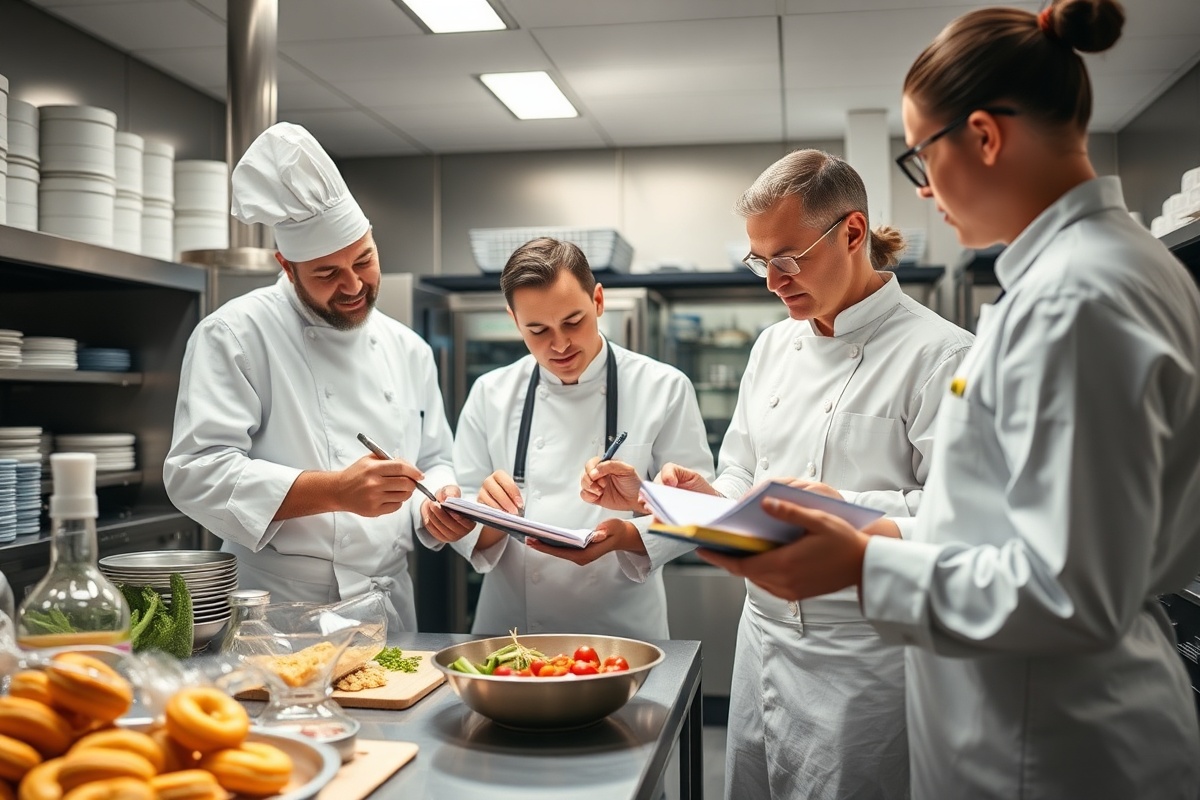
How Large Food Brands Develop New Products: The Complete Guide to Food Product Development & Successful Launches
Consumers often assume new food products begin with a chef having a brilliant idea—a moment of inspiration that transforms into a bestselling product.
In reality, successful product development is rarely driven by inspiration alone. The best food companies start by identifying a business opportunity, validating consumer demand, and designing a product that delivers value to both the customer and the business.
Whether it’s a new salad dressing, frozen meal, beverage, restaurant entrée, or specialty snack, every successful launch follows a structured development process.
The challenge isn’t creating something delicious.
The challenge is creating something that consumers love, operations can execute consistently, manufacturing can produce at scale, and the business can profit from.
This is the complete guide to food product development—covering strategy, process, commercialization, and the critical mistakes most brands make.
What Is Food Product Development?
Food product development is the process of transforming an idea into a commercially successful product.
It combines culinary creativity with business strategy, manufacturing, operations, marketing, and consumer research.
Think of it as the intersection of three worlds:
The Culinary World – Flavor, technique, ingredient quality, sensory experience
The Business World – Revenue, margins, market opportunity, competitive positioning
The Manufacturing World – Scalability, consistency, shelf-life, cost structure
Successful development balances five critical priorities:
- Consumer demand – Does the market actually want this?
- Culinary quality – Does it taste great and fit the brand?
- Operational feasibility – Can your team execute it?
- Manufacturing capability – Can you produce it consistently at scale?
- Financial performance – Can the business profit from it?
If one of those priorities breaks, the product usually fails—no matter how great the recipe.
Where Great Product Ideas Come From
Contrary to popular belief, most successful products don’t begin with a blank sheet of paper or a chef’s wild inspiration.
They usually come from one of five sources:
Consumer Trends
Changes in eating habits, wellness consciousness, convenience expectations, or emerging flavor preferences.
Example: The rise of functional foods with probiotics, adaptogens, or nutritional benefits.
Business Needs
Opportunities to increase average check size, reduce food cost, enter an adjacent category, or attract new customer segments.
Example: A casual restaurant chain noticing low breakfast revenue and developing a new breakfast platform to drive morning traffic.
Customer Feedback
Listening to guests through feedback surveys, social media, and direct conversation often reveals unmet needs or opportunities for product improvements.
Example: Guests asking for dairy-free or allergen-friendly alternatives.
Competitive Analysis
Understanding where competitors are succeeding—and where they’re leaving opportunities on the table.
Example: A competitor owns the premium salad category, but nobody dominates the prepared grain bowl space.
Ingredient Innovation
Sometimes a supplier introduces a new ingredient or technology that unlocks entirely new menu applications or manufacturing possibilities.
Example: A new plant-based protein that mimics meat texture more convincingly than previous generations.
The Culinary Strategist Product Development Framework
Every project follows a slightly different path based on complexity, scale, and resources. But most successful launches move through eight structured stages.
Stage 1: Opportunity Identification
Before developing anything, clarify the business objective.
What problem are we solving?
Common objectives:
- Increase average transaction value
- Improve food cost and margins
- Enter a new daypart (breakfast, lunch, dinner)
- Reduce labor requirements
- Expand into a new category (retail, foodservice, direct-to-consumer)
- Differentiate from competitors
- Address a specific customer complaint or request
Without a clear strategic objective, development becomes directionless. Teams pursue ideas based on passion rather than business impact.
The best question to ask: “If this product succeeds, what changes in our business?”
Stage 2: Consumer Research
Who is the target customer?
This isn’t about developing a product for everyone—it’s about understanding the specific customer you’re trying to reach.
Essential research questions:
- Purchase motivations: Why would someone buy this? What problem does it solve?
- Competitive alternatives: What are they buying today instead?
- Eating occasions: When and where is this consumed?
- Flavor expectations: What tastes would resonate with this audience?
- Price sensitivity: What price point works for the target segment?
- Brand fit: Does this align with how customers perceive your brand?
This stage prevents wasted development effort on products that look great but don’t match market demand.
Stage 3: Culinary Ideation
Now culinary experts begin developing initial concepts.
Multiple concepts are explored and evaluated based on:
- Flavor profile: Does it deliver on the brand promise?
- Differentiation: What makes it unique vs. competitive alternatives?
- Brand fit: Does it feel authentic to the brand?
- Operational simplicity: Can it be executed in a restaurant or manufacturing environment?
- Manufacturing feasibility: Can it be produced at scale?
- Cost potential: Can margins be achieved at realistic pricing?
The goal isn’t creating the most creative or complex product.
It’s creating the right product that balances all five priorities.
Stage 4: Prototype Development
Recipes move from concept into the kitchen, and iteration begins.
Multiple prototypes are tested to optimize:
- Flavor accuracy: Does it taste as intended?
- Texture and mouthfeel: Is the consistency right?
- Appearance and plating: Does it look appealing?
- Ingredient functionality: Do all ingredients serve a purpose?
- Preparation method: What’s the most efficient way to prepare this?
- Cost to produce: What’s the actual ingredient cost per unit?
- Shelf-life considerations: How long will it stay fresh?
Few successful products are perfect on the first attempt. This stage typically involves 5-15 iterations before reaching the desired result.
Stage 5: Commercial Validation
This is where dreams meet operational reality.
Now the difficult questions begin:
- Kitchen execution: Can operations prepare this in the required timeframe?
- Ingredient sourcing: Can purchasing reliably source all ingredients?
- Supply chain stability: What happens if a key ingredient becomes unavailable?
- Transportation and shelf-life: Does the product survive shipping and storage?
- Manufacturing reproduction: Can commercial equipment consistently replicate the recipe?
- Labor requirements: What’s the actual labor cost to prepare this?
- Equipment needs: Do we need new equipment, or can we use existing infrastructure?
This stage eliminates many otherwise great culinary ideas because they’re operationally infeasible or economically unviable.
A common discovery: A recipe that takes 20 minutes to prepare in a test kitchen might take 45 minutes in a busy restaurant environment.
Stage 6: Commercialization
Commercialization is where many organizations stumble.
A great recipe is not a commercial product until every variable is documented and standardized.
Commercialization requires:
- Manufacturing formulas – Precise specifications for every ingredient
- Ingredient standards – Exact supplier specifications, grades, and quality metrics
- Standard Operating Procedures (SOPs) – Step-by-step preparation instructions
- Yield documentation – Expected output per batch or per unit of input
- Nutritional information – Complete macronutrient and micronutrient analysis
- Allergen disclosure – Complete transparency on allergen presence
- Packaging specifications – Materials, sizing, labeling requirements
- Food safety documentation – HACCP plans, critical control points, testing protocols
- Quality standards – Sensory standards, appearance standards, consistency metrics
This stage transforms a kitchen recipe into something that manufacturing can reliably produce thousands of times with identical results.
Stage 7: Market Launch
Now marketing becomes just as important as culinary.
Successful launches require:
- Product positioning – How does this fit in the market? Who is it for?
- Messaging strategy – What’s the compelling reason to try this?
- Photography and visual assets – Professional images that appeal to your audience
- Menu placement – Strategic positioning on the menu or website
- Sales training – Teaching staff how to describe and sell the product
- Digital marketing – Social media, email, and paid advertising strategy
- Consumer education – Explaining unique benefits and usage occasions
- Influencer partnerships – Leveraging relevant voices in your category
Great products still fail without great marketing. Many teams spend 80% of effort on product development and 20% on launch—when the ratio should often be reversed.
Stage 8: Continuous Optimization
The launch isn’t the finish line.
High-performing companies continuously measure and optimize:
- Food cost – Is the recipe’s actual cost aligned with targets?
- Guest satisfaction – What’s the feedback? What can be improved?
- Labor efficiency – Are preparation times aligned with projections?
- Packaging effectiveness – Is packaging meeting goals? Customer feedback?
- Sales velocity – Is the product performing as projected?
- Margin realization – Is the product delivering expected profitability?
- Menu mix – How does this product affect overall sales mix and profitability?
Product development never truly ends. The best companies treat launches as the beginning of optimization, not the conclusion.
Why Food Products Fail
Research shows that 75-90% of new products fail within the first year.
Most failures aren’t culinary failures—they’re business failures.
Common reasons include:
Poor Consumer Research You develop a product nobody wants. Market research would have revealed this before wasting development resources.
Overly Complicated Recipes The recipe is beautiful but requires 15 ingredients, three different cooking techniques, and 30 minutes of prep time.
Weak Commercialization The product tastes great but can’t be consistently replicated at scale.
High Labor Requirements The product requires 45 minutes of labor per unit, making it economically unviable.
Supply Chain Problems A key ingredient becomes unavailable or pricing becomes untenable.
Pricing Mistakes The product costs more to produce than what consumers will pay.
Poor Marketing Execution The product is never positioned effectively or explained to customers.
Lack of Operational Testing Teams skip real-world testing in actual operating environments.
Unclear Competitive Differentiation The product looks and tastes like competitors but lacks a compelling reason to choose it.
Misalignment with Brand Identity The product feels disconnected from the brand, confusing customers.
Food Product Development Is Cross-Functional
The biggest mistake organizations make is treating product development as a culinary-only function.
Successful launches require collaboration between multiple teams:
- Culinary – Flavor, technique, quality, innovation
- Operations – Execution, feasibility, labor, consistency
- Procurement – Ingredient sourcing, vendor relationships, pricing
- Manufacturing – Production at scale, equipment capabilities, consistency
- Quality Assurance – Testing, food safety, compliance
- Marketing – Positioning, messaging, consumer communication
- Finance – Pricing, margin modeling, ROI
- Sales – Market feedback, channel viability, execution
The earlier these teams work together, the smoother commercialization becomes and the fewer surprises you encounter.
What Companies Often Overlook
Many organizations spend months perfecting flavor while giving little attention to operational execution.
Critical questions every team should ask early:
Ingredient Questions
- Can this ingredient be sourced consistently?
- What’s the price volatility?
- Are there backup suppliers?
- Is the ingredient reliable and traceable?
Operational Questions
- Does this increase prep time? By how much?
- Can the recipe be simplified without sacrificing quality?
- What equipment is required?
- Does it slow down service?
Cost Questions
- What’s the actual food cost at scale?
- What’s the labor cost?
- What’s the packaging cost?
- Does this support our target margin?
Scale Questions
- Can this scale nationally?
- Will quality remain consistent across 50, 100, or 500 locations?
- What’s required from a supplier perspective?
Brand Questions
- Does this strengthen the overall brand?
- Is it authentic to what customers expect from us?
- Does it create the desired perception?
Market Questions
- Can we explain this product in 10 words or less?
- Is there genuine market demand?
- Will consumers pay the required price?
- How will competitors respond?
The best products improve the entire business—not just the menu.
Frequently Asked Questions About Food Product Development
Q: How long does food product development typically take?
A: Depending on complexity and scope, projects can range from 6 weeks (simple menu addition) to 12+ months (new manufacturing, retail launch, significant innovation).
Q: What’s the difference between product development and commercialization?
A: Product development is creating and perfecting the recipe. Commercialization is translating that recipe into a repeatable, scalable product with standardized procedures, documented specifications, and consistent quality.
Q: Who should lead product development efforts?
A: The strongest programs combine culinary leadership with operations, manufacturing, and business strategy. Single-discipline ownership often leads to blind spots.
Q: How much does product development typically cost?
A: Costs vary widely based on complexity. A simple menu item might cost $5,000-$15,000 to develop. A new retail product launch can cost $50,000-$500,000+ depending on testing, packaging design, manufacturing setup, and regulatory requirements.
Q: What’s the failure rate for new food products?
A: Industry research suggests 75-90% of new products fail within the first year. Success requires more than great flavor—it requires market fit, operational capability, and effective marketing.
Q: How do we know if a product idea is worth developing?
A: Ask: Does it solve a business problem? Is there market demand? Can we execute it profitably? Do we have or can we build the capabilities? If the answer to all four is “yes,” it’s worth developing.
Q: Can we develop multiple products simultaneously?
A: Yes, but it requires discipline. Too many projects spread resources thin and compromise quality. Most organizations can effectively manage 3-5 concurrent projects depending on team size and complexity.
Q: What role does consumer testing play?
A: Critical. Small focus groups early identify flavor preferences, price points, and messaging effectiveness before full-scale launch. This prevents costly mistakes.
Q: Should we launch with multiple SKUs or start with one?
A: Start with one. Master the core product, optimize operations, establish market fit, and then expand. Launching multiple SKUs simultaneously divides focus and often leads to quality compromises.
Q: How do we ensure consistency across multiple manufacturing locations?
A: Comprehensive documentation of SOPs, strict ingredient specifications, regular quality audits, and ongoing team training. Consistency doesn’t happen by accident.
The Bottom Line
Successful food product development isn’t magic.
It’s a structured process that balances culinary creativity with business discipline, operational reality, and manufacturing capability.
The companies that consistently innovate don’t rely on inspiration alone—they rely on systems. They follow a process. They validate assumptions. They test in real conditions. They measure results.
Whether you’re launching a new restaurant menu item, developing a retail product, expanding into foodservice, or preparing for commercialization, the process matters just as much as the final recipe.
The products that succeed are the ones that solve business problems while creating memorable customer experiences.
Ready to Develop Your Next Winning Product?
Whether you’re perfecting a restaurant concept, launching a consumer packaged good, or preparing for scaled manufacturing, Culinary Strategist helps food brands develop, test, commercialize, and launch products that customers love and businesses profit from.
From initial concept validation through post-launch optimization, we combine culinary expertise with operational discipline and strategic business thinking.
Schedule Your Free Strategy Consultation to discuss your product development goals and how we can help you bring your next great idea to market successfully.
Kyle Markt is a CEO, chef, and strategic advisor with 20+ years of experience in food product development, commercialization, and operational scaling. As founder of Culinary Strategist, he partners with restaurants, food brands, and manufacturers to develop products that delight customers and drive business growth.

Kyle Markt
CEO, chef, operator, and strategic advisor with 20+ years of experience in food business strategy, culinary innovation, and operational excellence. Founder of Culinary Strategist, helping restaurants and food brands build smarter, more profitable businesses.
Connect on LinkedIn →